
Your child's first dental visit: when to go and what happens

Book your child's first dental visit by their first birthday, or within six months of their first tooth coming through. That is the advice of the American Academy of Pediatrics. A first visit with nothing to fix lets your child meet the chair, the light and the people before anything hurts.
At Durban Dental Care, a first visit is a check and a chat, and you go home with practical advice on brushing and toothpaste.
When to book
If your child is older and has never been, book a first visit now. We're open on Saturday mornings too, so school needn't get in the way.
We take medical aid, card and cash, and we're on Discovery's FlexiCare dental network.
What happens at the first visit
-
Step 1: Time to talk
At a first visit we take a little extra time with you and your child, talking about the teeth, anything you have noticed and any questions you have.
-
Step 2: A look in the mouth
We count your child's teeth and check the teeth and gums for early signs of decay.
-
Step 3: Advice for you
Brushing, how much fluoride toothpaste to use, and what to expect as more teeth come through.
-
Step 4: Next time
We tell you when to bring your child back.


Preparing your child
A little preparation at home helps your child know what to expect:
- Talk about the visit simply: someone will count your teeth and check that they are healthy.
- Book a time when your child is usually rested, not at nap time.
- Bring a comfort toy.
- Stay calm and positive yourself; children notice how you feel about the visit.
- Tell us if your child has been anxious at a dental visit before, and about any medical conditions, medicines or allergies.
- If your child is nervous, ask us whether anything on our comfort menu, such as headphones or softer lighting, would help.
How much toothpaste, at each age
Use a fluoride toothpaste from the first tooth. The amount changes with age:
| Age | How much toothpaste |
|---|---|
| First tooth to 3 years | A smear the size of a grain of rice |
| 3 to 6 years | A pea-sized amount |
Brush for your child, or watch while they brush, and teach them to spit out the extra rather than rinse, so the fluoride stays on the teeth. Sheffield Children's NHS Foundation Trust in the UK advises supervising brushing until at least age 7, and using a toothpaste with no less than 1,000 ppm (parts per million) of fluoride; it recommends 1,450 ppm. The strength is printed on the tube.
Why baby teeth matter
Baby teeth hold space for the adult teeth that come through later, and children use them to chew and to speak. Decay in baby teeth can still cause pain and infection, even though the teeth will fall out.
In South Africa's 2002 national children's oral health survey, about six in ten 6-year-olds had tooth decay, and most of it had not been treated. An early check-up can find decay while it is still small.
After the first visit
Bring your child back at the interval we set: UK national guidance from NICE says children should have no more than 12 months between check-ups. Keep up brushing twice a day with fluoride toothpaste, using the amounts above. When the first adult back teeth come through, at about age 6, ask about fissure sealants, a thin coating that protects the grooves of those teeth. The second molars follow at about age 12. As your child grows, check-ups can include a teeth cleaning when they need one.
If a baby tooth is knocked out, never put it back in; call us on 031 563 2473 so the gum and the teeth around it can be checked (see toothache and broken teeth). If your child grinds their teeth at night, read about teeth grinding; it is common in children and often stops by the teens. Everything we do for children is on our children's dental care page.
Your questions about a child's first visit
By their first birthday, or within six months of the first tooth coming through: that is the American Academy of Pediatrics' advice. We see children at Durban Dental Care, 490 Chris Hani Road, Durban North, for check-ups, cleaning, fissure sealants, fillings and simple extractions.
We talk with you about your child's teeth, then count the teeth and check the teeth and gums for early signs of decay. You get advice on brushing and toothpaste, and we tell you when to come back.
Talk about it simply (someone will count your teeth), book a time when your child is usually rested, and bring a comfort toy. Tell us when you book if your child has been anxious before.
No more than 12 months apart, according to UK guidance from NICE. Some children need to come more often, and we set the interval for your child at the check-up.
Google review
My son did not cry at all on his very first visit to the dentist thanks to the great staff here
Google review
A professional & friendly team. Overall great experience at the dentist. My 3 year old actually asked if he could visit again. Safe secure parking at the back.
Google review
Front he receptionist to the dentist and the assistant. No pains after and every step is explained. I think I just found a dentist for my kids and I.
Dental care for children
Children
Check-ups, cleaning, fissure sealants and fillings for children, with extra time to settle in at a first visit.
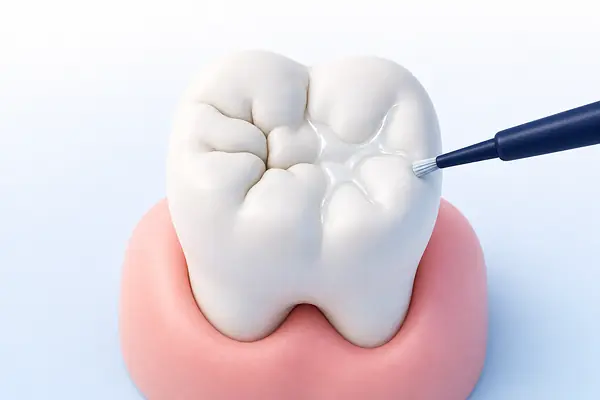
Fissure sealants
Seal the grooves where decay often starts in your child's back teeth, with no drilling and no injection.
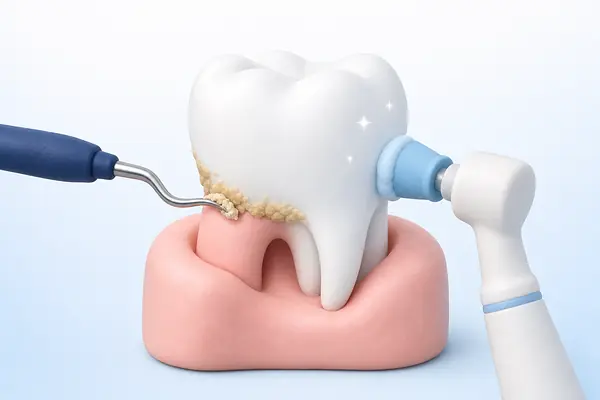
Teeth cleaning
Tartar and surface stains taken off, with your check-up at the same visit if it is due.
Three ways to book your child in
Call us
Call 031 563 2473 during practice hours (Mon to Fri 9am to 4pm, Sat 9am to 12pm). Tell us your child's age and whether they have been before.
Call 031 563 2473: Call usWhatsApp us
Send your name, your child's age and a day that suits you, and we'll reply with a time.
WhatsApp usBook online
Use the short form on our booking page and choose Children as the treatment.
Book an appointment: Book onlineMore guides for parents

Are fissure sealants worth it for children and adults?
What the evidence says about fissure sealants, their limits, and who they are most worth it for.
- Prevention

Teeth grinding at night: signs, causes and night guards
How to tell if you grind your teeth at night, what causes it, what it does to teeth and how a night guard helps.
- Prevention

Chipped or broken tooth: what to do now and how it can be repaired
First steps after a chip or break, how urgent it is, and the ways a damaged tooth is repaired.
- Toothache and aftercare
Book your child's first visit


