
Are fissure sealants worth it for children and adults?

For most children, yes. A fissure sealant is a thin coating painted into the deep grooves of the back teeth, where decay often starts, and the US Centers for Disease Control and Prevention (CDC) says sealants can prevent up to 80% of cavities in those teeth for two years. That is a lot of protection for a few minutes per tooth, with no drilling and no injection, during the years when back teeth are most at risk.
We place fissure sealants for children and adults at Durban Dental Care in Durban North.
What a sealant does
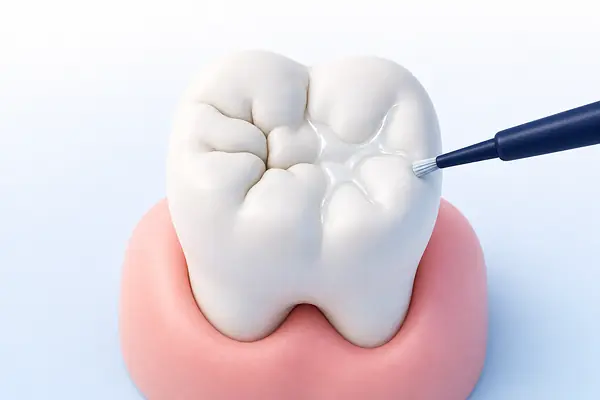
Back teeth have grooves and pits, called fissures, on their chewing surfaces. Food and bacteria collect in them easily, which is why decay so often starts there. A sealant is a thin coating of resin or glass ionomer that fills the grooves and seals them over.
Sealants go on the molars and premolars, the back teeth that do most of the chewing.


What the evidence shows
The CDC, the US national public health agency, advises placing sealants soon after the adult molars come in, and says they still protect against 50% of cavities for up to four years (CDC: about dental sealants).
Cleveland Clinic, a US hospital group, says sealants last up to five years and may then need replacing. It describes ages 6 to 14 as the cavity-prone years for the back teeth, which is why most sealants are placed in childhood.
Benefits of fissure sealants for children
- Easy for young children. Your child sits back with their mouth open, and nothing needs numbing.
- Easier cleaning. A sealed groove is smoother, so there is less for food and bacteria to cling to.
- Fewer fillings later. A healthy tooth that is sealed is less likely to need a filling down the line.
Disadvantages of fissure sealants
- Sealants wear with chewing and can chip, especially on very hard, sticky or chewy food, and part or all of a sealant can come away.
- They cover only the chewing surfaces, not the sides of the teeth or the gaps between them.
- They go only on healthy teeth: not on a tooth that is still partly under the gum, or one that already has a filling. Once a groove has decay, the tooth needs a filling instead.
- A worn sealant may need redoing later.
None of these is a reason to skip sealants on a deep-grooved new molar. They are reasons to keep up check-ups, where we catch wear early.
Who sealants are most worth it for
- Children whose first adult back teeth have just come through, at about age 6, and again when the second molars come through at about 12.
- Children and teenagers who have already had decay or a filling in other teeth.
- Adults with deep grooves on healthy back teeth, especially if decay has been a problem in other teeth.
They are less worth it on shallow grooves that clean easily, in someone who has not had decay.
How sealants are placed
-
Step 1: Clean
The tooth is cleaned, dried and kept dry with cotton.
-
Step 2: Prepare
A gel is applied to help the sealant stick, then rinsed off, and the tooth is dried.
-
Step 3: Paint on
The sealant is painted into the grooves of the chewing surface.
-
Step 4: Set
A curing light hardens it, and your child can eat and drink as normal afterwards.
Investing in your teeth
We take medical aid, card and cash, and we're on Discovery's FlexiCare dental network; whether your scheme pays for sealants depends on your plan. You can also ask us about paying in instalments, and read how sealants and check-ups help keep dental costs down.
Keep brushing as well
Sealed teeth still need brushing twice a day with fluoride toothpaste, cleaning between the teeth and regular check-ups. Keeping sugary snacks and drinks to mealtimes helps too. For how much toothpaste a child should use at each age, read your child's first dental visit.
Your questions about fissure sealants
Not essential, but worth it for most children's new back teeth, in the years when decay in their grooves is most likely. At the check-up we look at how deep the grooves are and tell you which teeth would benefit.
Usually not. Sealants do most good soon after a back tooth comes through, but a back tooth with no decay or filling can still be sealed later, and the second molars only come through at about 12.
Part or all of a sealant can come away over time. We check sealants at each check-up and top up or replace one that has worn.
They can be, on healthy back teeth with deep grooves. Ask at your check-up whether yours would benefit.

Ask about sealants at your child's next check-up
Book the check-up and we'll tell you which back teeth are ready to seal.
Everything else we do for children is on our children's dental care page.
Related treatments
Fissure sealants
Seal the grooves where decay often starts in your child's back teeth, with no drilling and no injection.
Children
Check-ups, cleaning, fissure sealants and fillings for children, with extra time to settle in at a first visit.
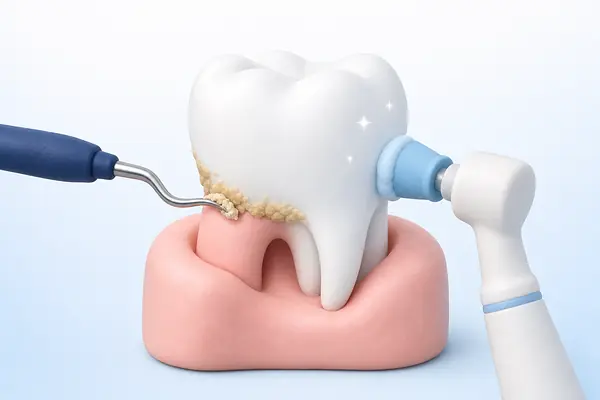
Teeth cleaning
Tartar and surface stains taken off, with your check-up at the same visit if it is due.
Book fissure sealants
Add your name and a day that suits you, and send the request to us on WhatsApp.

More guides

Your child's first dental visit: when to go and what happens
When to book a first dental visit, what happens, how to prepare your child and how to look after baby teeth.
- Children

What a dental visit costs in South Africa, and how to keep costs down
What a dental visit is made up of, why fees differ, how to compare them and how to spend less on your teeth.
- Costs and medical aid

Teeth cleaning price: what a scale and polish involves and costs
What a scale and polish involves, how often you need one and how medical aid pays for it.
- Costs and medical aid