
Bleeding gums when you brush: causes and what to do

Gums that bleed when you brush or floss are most often a sign of gingivitis: inflammation of the gums caused by plaque along the gum line. Gingivitis can be reversed with careful brushing twice a day, cleaning between your teeth every day and a professional clean to take off any tartar. If the bleeding doesn't settle with careful cleaning, or your gums are swollen, sore or shrinking back from your teeth, book a check-up.
Why gums bleed
Plaque is the soft film of bacteria that forms on your teeth every day. Where it's left along the gum line, it irritates the gum, which turns red, swells and bleeds easily when you brush, floss or bite into something hard. If plaque hardens into tartar, brushing alone can't remove it, and the gum stays inflamed until the tartar is cleaned off.
Left untreated, gingivitis can develop into periodontitis, a deeper form of gum disease that damages the bone holding the teeth. Teeth can then loosen, and advanced gum disease can let teeth drift apart, which is one reason for new gaps between front teeth.
Bleeding gums can also have other causes, which is why we ask about your health and any medicines you take at your check-up.
What to do at home
Better cleaning at home is where treating gingivitis starts. Four habits to begin with:
-
Step 1: Brush twice a day
Use a fluoride toothpaste and a soft brush, angled at the gum line, for about two minutes.
-
Step 2: Clean between your teeth every day
Use floss or small interdental brushes. Gums may bleed a little at first; keep going gently, because leaving them alone lets more plaque build up.
-
Step 3: Spit, don't rinse
After brushing, spit out the toothpaste rather than rinsing it away. If you use a mouthwash, use it at a different time of day.
-
Step 4: If you smoke, think about stopping
Smoking makes gum disease worse, and stopping is part of treating it.
Mouthwash doesn't replace brushing and cleaning between your teeth.
When to book a check-up
Book a check-up if:
- the bleeding doesn't settle with careful cleaning at home;
- your gums are swollen, sore or shrinking back from your teeth;
- a tooth feels loose;
- you have bad breath or a bad taste in your mouth that brushing doesn't clear.
If your gums are very sore and swollen, call us on 031 563 2473 and ask to be seen as soon as possible. If swelling spreads across your face or towards your eye or neck, you have a fever with the swelling, or you find it hard to breathe or swallow, go to a hospital emergency unit straight away.
What happens at the practice
We check your gums and teeth, and may take X-rays to see the bone around them, then talk you through what we find and the treatment that fits.
If gingivitis is the cause, a scale and polish removes the tartar above and just below the gum line, and you get advice on cleaning at home. If gum disease has gone deeper, the usual first treatment is a deep clean below the gum line (non-surgical root planing). It is normally done with local anaesthetic and can be split over two visits. Our teeth cleaning page explains both.
If you're nervous, tell us when you book. Our comfort menu has headphones, a blanket and softer lighting.
Bleeding gums in pregnancy
Gum inflammation is common in pregnancy and is often at its worst in the third trimester. Dental check-ups and cleaning can go ahead at any stage of pregnancy, so you don't have to wait until after the birth. Tell us you're pregnant when you book, and keep up brushing twice a day and cleaning between your teeth.
Gum health and the rest of your body
A South African Dental Association communiqué for Oral Health Month, published in the South African Dental Journal in 2021, notes that gum disease has been linked to heart disease, diabetes and problems in pregnancy. A link is not proof that one causes the other, but it is one more reason to have bleeding gums checked and treated early.
Your questions about bleeding gums
No. Keep brushing twice a day and cleaning between your teeth, gently. Bleeding from gingivitis settles as the plaque along the gum line clears.
It depends on the cause. Bleeding from gingivitis should settle once careful cleaning at home and a professional clean have cleared the plaque and tartar. If it doesn't, book a check-up.
Often, yes, usually early gum disease (gingivitis), which careful cleaning and a professional clean can reverse. Deeper gum disease is usually treated first with a deep clean below the gum line.

Have your gums checked and cleaned in one visit
Book a check-up and a teeth cleaning together, on a weekday or a Saturday morning.
Treatments for healthy gums
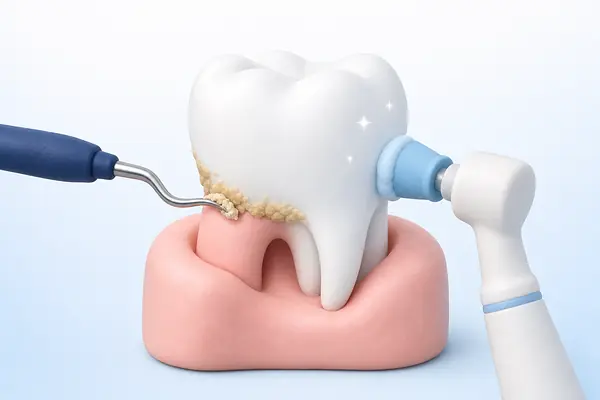
Teeth cleaning
Tartar and surface stains taken off, with your check-up at the same visit if it is due.
Check-ups and X-rays
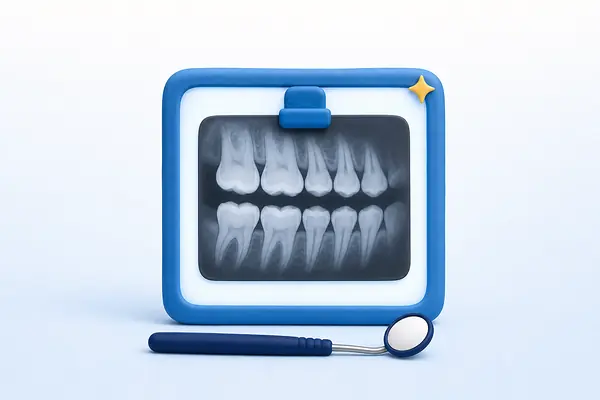
Catch decay and gum problems early. We examine your teeth, gums and mouth, and take X-rays only where they're needed.
Book a check-up
Choose a check-up or teeth cleaning and a day that suits you, and we'll confirm a time on WhatsApp.

More guides from the practice

Teeth cleaning price: what a scale and polish involves and costs
What a scale and polish involves, how often you need one and how medical aid pays for it.
- Costs and medical aid

Closing a gap between your front teeth without braces
When a small gap between front teeth can be closed with composite, and when the cause needs other treatment.
- Cosmetic treatment

Your child's first dental visit: when to go and what happens
When to book a first dental visit, what happens, how to prepare your child and how to look after baby teeth.
- Children